So, instead of blogging about ice cream, I wore the ice cream socks.


That done, meet the fava bean.


My relationship with said bean began a year or so ago, when I moved into the Owl House, and discovered a circular jungle in the back yard. The fava forest was Rainbow's doing, and her legacy lives on: a few beans from last year sprouted.

Of course, I had no idea what to do with these things.
When confronted with a new green thing to eat, I often turn to Chez Panisse Vegetables to get a feel for how to prepare it, what might be done with it, what flavors work well with it. The recipes tend to be simple (and generally delightful), which is exactly what I need when I'm getting to know a new vegetable. The recipe that caught my eye this time was for a fava bean ragout. I added the orzo to make it a light late spring meal.
Happy explorations!
Fava Bean Ragout with Orzo
Adapted from Chez Panisse Vegetables by Alice Waters
Serves 2 as a light meal
Ingredients
2 1b whole fava beans
1 large clove of garlic, peeled and chopped fine
1 small sprig of rosemary, leaves removed and chopped fine
Olive oil
Salt and pepper
1 tsp lemon juice
1/3 cup orzo
parmesan

Directions
First, start a pot of water for the orzo. When it boils, add the orzo, and cook 7-10 minutes, until al dente. When it's done, drain it and set it aside.
To prepare the fava beans, you shell the tough outer pod:

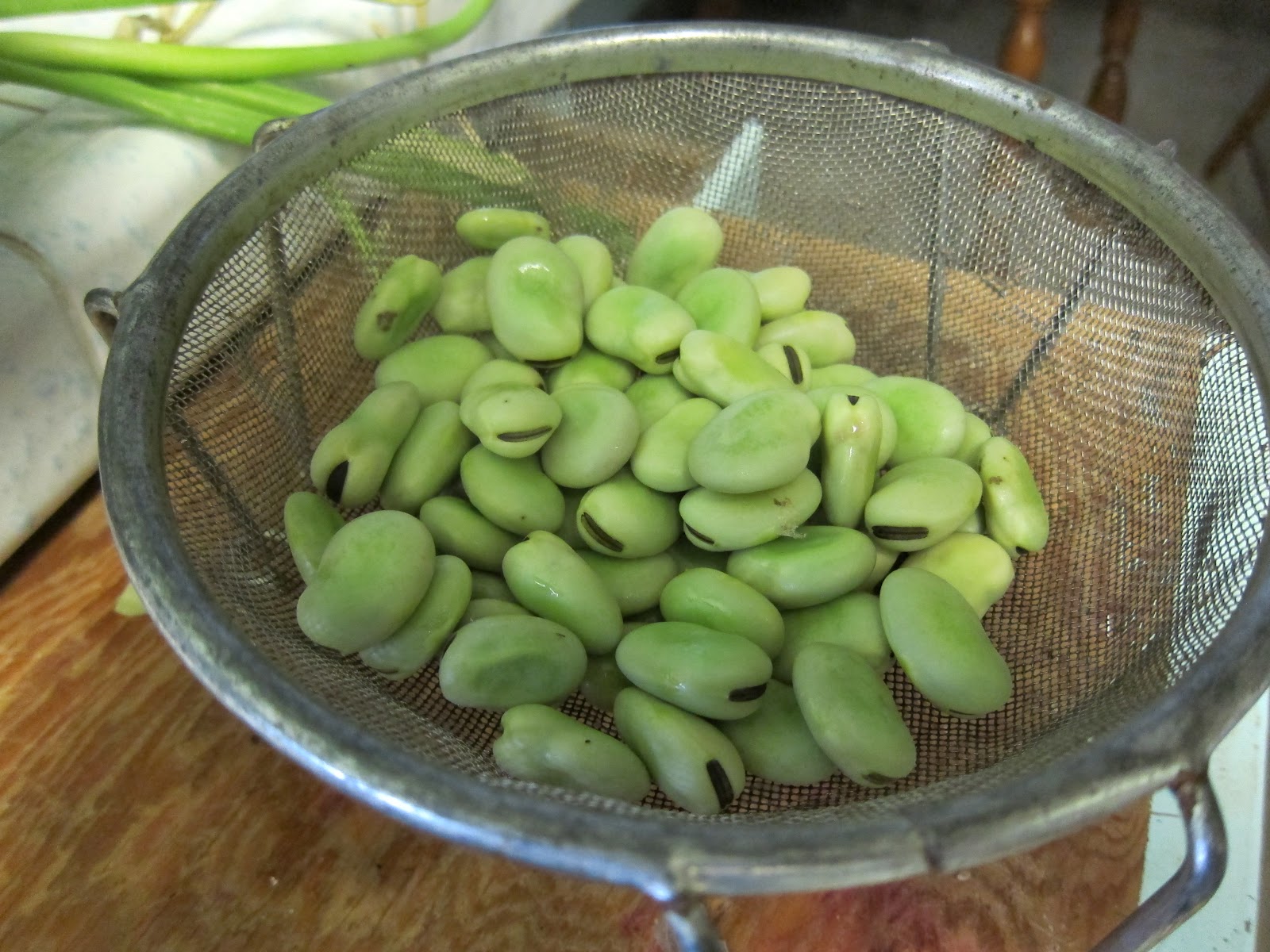
You'll be left with a pile of beans, which (secretly) have yet another skin that you'll remove by blanching the beans: bring a pot of water to a boil, add the favas, and simmer for a minute. Drain the beans,

then find the Professor to come help you peel them.

I found it worked best to break the skin by pinching it with a fingernail, then gently squeezing them out. You'll be left with a pile of bright green, totally naked favas. Put the beans in a deep, not too wide pot, and add olive oil and water in equal parts just to cover (I found I needed 1/3-1/2 cup of each). Add the finely chopped garlic and rosemary leaves, 1/4 teaspoon of salt (to start), and several good grinds of pepper. Bring the mixture to a simmer, cover the pan, and let simmer for 5 minutes - until the beans are tender. When the favas are ready, add the orzo and the lemon juice, and stir to combine. Taste for salt and pepper, and adjust as you like (careful with the salt - I like to serve it with parmesan, which is salty on its own).

Serve with grated parmesan on top. (Like I said.) We, um, at it all that night, but I bet it would be delicious cold as well.
When confronted with a new green thing to eat, I often turn to Chez Panisse Vegetables to get a feel for how to prepare it, what might be done with it, what flavors work well with it. The recipes tend to be simple (and generally delightful), which is exactly what I need when I'm getting to know a new vegetable. The recipe that caught my eye this time was for a fava bean ragout. I added the orzo to make it a light late spring meal.
Happy explorations!
Fava Bean Ragout with Orzo
Adapted from Chez Panisse Vegetables by Alice Waters
Serves 2 as a light meal
Ingredients
2 1b whole fava beans
1 large clove of garlic, peeled and chopped fine
1 small sprig of rosemary, leaves removed and chopped fine
Olive oil
Salt and pepper
1 tsp lemon juice
1/3 cup orzo
parmesan

Directions
First, start a pot of water for the orzo. When it boils, add the orzo, and cook 7-10 minutes, until al dente. When it's done, drain it and set it aside.
To prepare the fava beans, you shell the tough outer pod:

You'll be left with a pile of beans, which (secretly) have yet another skin that you'll remove by blanching the beans: bring a pot of water to a boil, add the favas, and simmer for a minute. Drain the beans,
then find the Professor to come help you peel them.

I found it worked best to break the skin by pinching it with a fingernail, then gently squeezing them out. You'll be left with a pile of bright green, totally naked favas. Put the beans in a deep, not too wide pot, and add olive oil and water in equal parts just to cover (I found I needed 1/3-1/2 cup of each). Add the finely chopped garlic and rosemary leaves, 1/4 teaspoon of salt (to start), and several good grinds of pepper. Bring the mixture to a simmer, cover the pan, and let simmer for 5 minutes - until the beans are tender. When the favas are ready, add the orzo and the lemon juice, and stir to combine. Taste for salt and pepper, and adjust as you like (careful with the salt - I like to serve it with parmesan, which is salty on its own).

Serve with grated parmesan on top. (Like I said.) We, um, at it all that night, but I bet it would be delicious cold as well.


